Part 1: THE MAP WAS DRAWN BEFORE THE PEOPLE AGREED
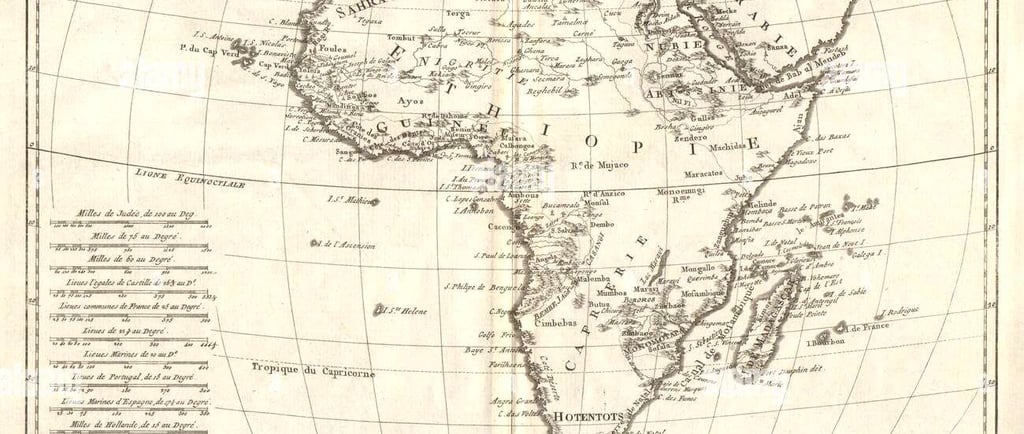
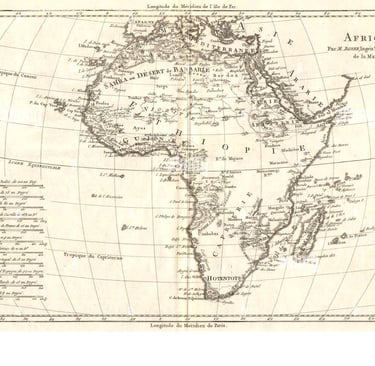
For generations, the challenges facing Africa have been explained through the language of governance, corruption, conflict and underdevelopment. While these factors remain important, they do not fully explain why so many African states continue to struggle with questions of legitimacy, cohesion and political stability. This paper argues that part of the answer lies much earlier in history. It examines how the colonial partition of Africa interrupted an ongoing process of political evolution, replacing it with borders that were designed for administration rather than nation-building. By understanding how the map came before the people, we can begin to better understand why the project of African political unity remains unfinished.
While the challenges of artificial borders are immense, progress can begin at the community level. Networks and initiatives that connect people across regions, celebrate shared history, and provide access to education can rebuild trust and identity from the ground up. By empowering local leaders, youth, and diaspora communities, Africa can nurture a sense of belonging and shared purpose that respects diversity while fostering unity. This is the vision behind initiatives like UPAN, which create sustainable platforms for cooperation and empowerment before structural politics can catch up.


THE MAP WAS DRAWN BEFORE THE PEOPLE AGREED
Artificial Borders and the Unfinished Project of African Political Unity
By Jasper Taylor
Africa did not arrive at the modern nation state in the same way as Europe or much of Asia. In most parts of the world, borders were the end result of long processes of conquest, negotiation, integration, and internal struggle. In Africa, borders came first. Identity, legitimacy, and political cohesion were expected to follow.
This reversal is at the heart of many of the structural challenges African states continue to face today.
When European powers partitioned Africa in the late nineteenth century, they did not create nations. They created administrative territories. Lines were drawn on maps to serve imperial convenience rather than social reality. These borders cut across ethnic groups, trade routes, ecological zones, and political systems that had evolved over centuries. Peoples who had never shared a political destiny were suddenly declared citizens of the same state. Others who had long histories of cooperation and shared identity found themselves separated by international frontiers.
The result was not simply diversity within states. Diversity exists everywhere. The problem was that African states were expected to function as modern, centralized nation states without having gone through the historical processes that normally produce shared political identity. In Europe and parts of Asia, these processes were often violent and slow. Kingdoms expanded through war, absorbed rivals, standardized languages, imposed laws, and cultivated national myths over hundreds of years. Legitimacy emerged through struggle, however brutal that struggle often was.
In Africa, that process was interrupted.
Pre colonial African political systems were not primitive or static. Many were highly sophisticated, but they were adapted to local geography and social realities. Authority was often layered rather than absolute. Power was negotiated between kings, councils, elders, religious leaders, and communities. Some states expanded through conquest, others through alliance and trade. Importantly, political belonging was flexible. Identity could be plural and overlapping rather than fixed and singular.
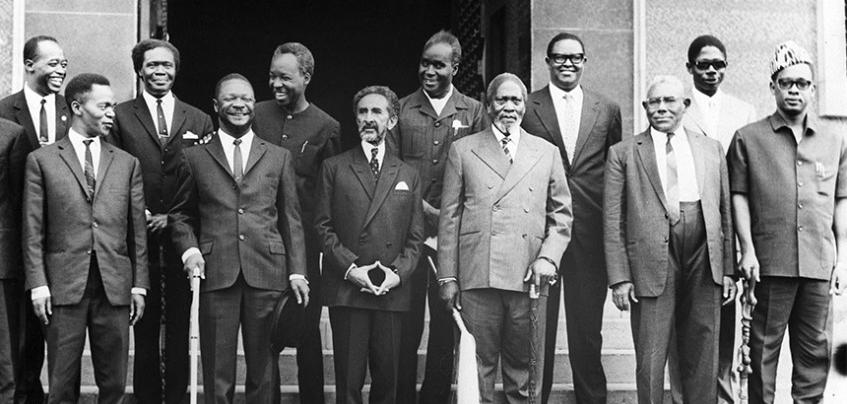
Colonial rule dismantled these systems and replaced them with centralized administrations designed for extraction rather than legitimacy. Colonial governments ruled through force, bureaucracy, and selected intermediaries, often empowering some groups over others. When independence came, the colonial state apparatus remained, but the social foundations beneath it were weak or contested. African leaders inherited borders they did not choose, institutions they did not design, and populations who had never consented to be governed together under a single political or cultural identity.
This has had lasting consequences.
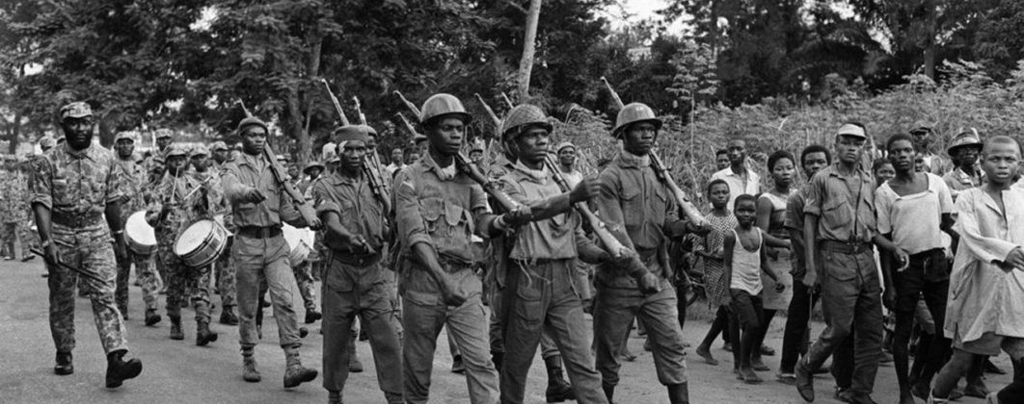
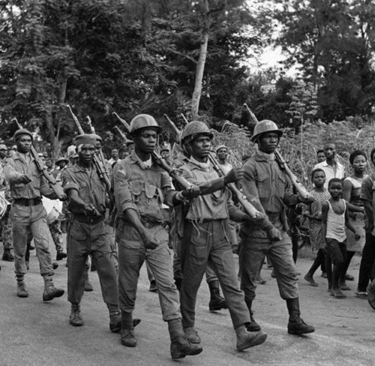
In countries like Nigeria, the state encompasses hundreds of ethnic groups with distinct histories and political traditions. There was no pre colonial Nigerian identity to build upon, only an administrative unit created by colonial amalgamation. Post independence politics quickly became a struggle over who would control the center and distribute resources. The Biafran War was not an anomaly. It was a manifestation of a deeper problem of forced political unity without shared consent.
In the Democratic Republic of Congo, a land mass larger than Western Europe, the scale of the state far exceeds the capacity of its institutions to govern effectively. The colonial experience left behind a hollow state, rich in resources but poor in legitimacy. The result has been persistent fragmentation, external interference, and cycles of violence that are often mischaracterized as chaos rather than understood as the legacy of an imposed political form.
In Rwanda and Burundi, colonial authorities hardened social categories that had previously been more fluid. By racializing identities (which were originally fluid and class based) and embedding it into administration, colonialism turned social distinctions into existential political divisions. The consequences were catastrophic.
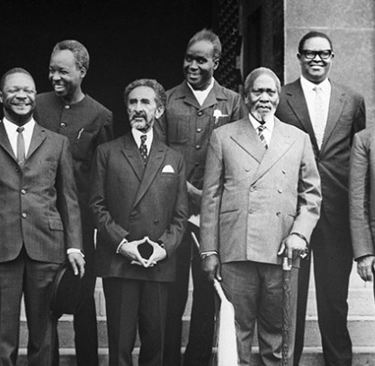
These examples are not evidence that Africans are incapable of building stable states. They are evidence that the form of the modern African state was imposed prematurely and without the historical processes that normally give states durability.
What makes this especially tragic is that Africa was not moving toward fragmentation before colonization. In many regions, political systems were evolving. Trade networks were expanding. States like Asante, Ethiopia, Buganda, and the Sahelian empires were centralizing authority and adapting external influences on their own terms. Colonialism froze these trajectories and replaced them with rigid borders and alien institutions. When colonial rule ended, Africa was expected to function as a collection of finished nation states rather than societies still in the process of political amalgamation.
Before the Map: How African Political Order Actually Worked
To understand what was interrupted, it is necessary to move beyond the assumption that Africa lacked political order before colonial rule. Pre-colonial African societies were not organised as modern nation-states, but neither were they politically incoherent. Governance was typically layered rather than uniform, relational rather than purely territorial, and adaptive rather than fixed. Authority was exercised through overlapping systems of kinship, councils of elders, age-grade institutions, guilds, religious legitimacy, and trade networks. Power was often negotiated and shared, rather than monopolised by a single central authority.
This structure was not accidental. It reflected African realities: vast ecological diversity, high linguistic plurality, mobile populations, and economies organised around trade routes rather than fixed borders. Political legitimacy flowed from social consent and performance rather than abstract sovereignty. In this context, rigid territorial states with sharp borders would have been both impractical and destabilising. Pre-colonial systems were designed to manage diversity, not erase it.
Trade played a central coordinating role. Long before European intervention, African societies were connected through extensive commercial networks linking the Sahel to North Africa, the Swahili Coast to the Indian Ocean world, and forest kingdoms to savannah empires. These networks facilitated not only the exchange of goods, such as gold, salt, textiles, and agricultural products, but also ideas, technologies, legal norms, and diplomatic practices. Political authority often followed trade, allowing influence to expand organically without requiring uniform rule.
Relevant Pre-Colonial Examples of Political Evolution
Several African polities were already demonstrating trajectories toward larger-scale coordination and state formation on their own terms.
The Asante Empire developed a sophisticated centralised system combining military organisation, taxation, judicial authority, and a unifying constitutional framework symbolised by the Golden Stool. Authority was centralised, but local autonomy was preserved through a federated structure that balanced unity with diversity.
In the Ethiopian highlands, a long-standing imperial tradition combined religious legitimacy, administrative continuity, and diplomatic engagement with external powers. Ethiopia’s survival as a sovereign polity into the modern era illustrates that African governance was not inherently incompatible with statehood or international politics.
Buganda, in the Great Lakes region, developed a highly organised kingdom with professional administrators, a standing army, and a system of land tenure that tied political authority to service rather than ethnicity alone. Its institutions were evolving rapidly before colonial disruption.
Across the Sahel, empires such as Mali and Songhai coordinated vast territories through taxation systems, legal pluralism, scholarly networks, and trade-based integration rather than rigid borders. Their influence extended through allegiance and economic participation, not continuous territorial occupation.
These examples do not suggest a single African model, but they do demonstrate political evolution, institutional learning, and increasing scale. Africa was not static. It was becoming.
Limitations, Conflict, and the Question of Fragmentation
This does not mean pre-colonial Africa was free from conflict or exploitation. Inter-polity warfare existed. Slavery existed in multiple forms. Political fragmentation made some societies vulnerable to external manipulation. These realities must be acknowledged.
However, it is important to distinguish between endogenous challenges and systemic collapse. Many of these issues were not continent-wide structural failures, but localised dynamics common to all pre-modern societies, including Europe. What changed decisively was the scale and intensity of these problems once Africa was incorporated into global extractive systems.
External demand transformed slavery from a limited social institution into a mass commercial enterprise. Firearms altered the balance of power between polities, incentivising raiding over integration. Colonial rule deliberately disrupted horizontal coordination between African societies while integrating them vertically into imperial economies. Where African systems had once evolved through negotiation and adaptation, they were now frozen, subordinated, or dismantled.
Fragmentation became pathological not because diversity existed, but because mechanisms for managing it were destroyed and replaced with alien institutions lacking local legitimacy.
Was the Western Nation-State “Proven Superior”?
The apparent success of the Western nation-state does not, by itself, invalidate African political traditions. European state formation was not inevitable, nor was it peaceful. It emerged through centuries of war, coercive taxation, religious conflict, and imperial extraction. Its effectiveness rested on specific historical conditions, including access to capital, colonial expansion, and industrialisation.
To say that the nation-state proved powerful is not to say it was universally appropriate. In Africa, it was imposed rapidly, externally, and without the social foundations that made it functional elsewhere. Borders were fixed before legitimacy was established. Authority was centralised before trust existed. Diversity was treated as a problem to be suppressed rather than a reality to be governed.
The failure was not African incapacity, but forced acceleration without organic institutional development.
Beyond Nostalgia: What Can Be Recovered, and How
The relevance of pre-colonial African governance today does not lie in replication, but in principle. Layered authority, plural legitimacy, negotiated belonging, and network-based coordination remain highly applicable in a globalised world. These logics are visible today in successful regional blocs, transnational professional networks, digital communities, and diasporic economic systems.
Reclaiming these approaches does not require rejecting modern states. It requires recognising their limits and supplementing them with structures that reflect African realities. Strong local autonomy, regional integration, cross-border cooperation, and continental platforms for knowledge, trade, and coordination are not radical departures. They are continuations of interrupted trajectories.
Colonialism did not simply draw the map incorrectly. It replaced a process of political becoming with the expectation of instant political maturity. The task of the present is not to undo history, but to resume it deliberately, informed by both Africa’s past and the conditions of the modern world.
Colonial borders did not merely divide territory. They froze unfinished political processes into permanent administrative facts.
This is why the question of borders remains unresolved.
African leaders quickly recognized the danger of redrawing boundaries, fearing endless conflict. The decision to preserve colonial borders was pragmatic, but it also locked in structural problems. The modern African state often struggles to command loyalty not because people reject collective life, but because the state itself does not reflect organic political communities.
This is where Pan African thought becomes essential, not as romantic idealism, but as structural realism. If the colonial nation state is too large and artificial at the local level, and too small and weak at the global level, then Africa’s future may lie in layered political belonging. Strong local autonomy within states. Regional integration across borders. Continental cooperation that reflects shared historical experience and collective interest.
Africa’s challenge is not that it failed to become Europe. It is that it was never given the chance to complete its own political evolution.
The map was drawn before the people agreed. The task of the present is not to erase that map overnight, but to renegotiate belonging, legitimacy, and unity in ways that reflect African realities rather than colonial convenience. That work remains unfinished, but it is not impossible.
Contact
United Pan African Network
UPAN is where the African diaspora comes to build.
Ready to Join the UPAN Hub
Already know what UPAN is?
Join the UPAN Hub in under 60 seconds.
Simply enter your email address and we'll get you started.
info@unitedpanafricannetwork.com
+44(0) 7933 139 322
© 2025. United Pan African Network All rights reserved.